
Renewable Energy Credits (RECs): What You Need To Know
With the rising concern for climate change and sustainability, the increase in social and governance (ESG) considerations as well as the growing cost and demand of electricity, businesses in Malaysia are showing a great favour shifting from conventional energy to renewable energy (RE).
Other than enjoying the benefits promised by the RE investment, such as cost savings, tax incentives, and brand contribution to the environment, what more can businesses do to level up their investment value?
Businesses all over the world are taking The Climate Pledge to achieve carbon reduction through various conducts; adopting energy efficient systems, using alternate energy sources, investing into RE projects and many more. However, many still find it impossible to fully reach carbon neutral on their own.
The introduction of Renewable Energy Certificate (REC) is expected to bridge the gap, helping businesses to “use” RE without physically consuming it. For instance, every 1MWh of conventional energy consumed, businesses can purchase the same 1MWh of RE (represented by a REC) produced in another location. Using this framework, they can be 100% carbon neutral in their consumption.
What is a Renewable Energy Certificate (REC)?
REC is a type of Energy Attribute Certificate (EAC) that represents the environmental attributes of the generation of a one-megawatt hour (1MWh) of energy produced by renewable sources.
The production of 1MWh renewable energy is tracked, validated and can be used to offset scope 2 emissions, which are the indirect emissions from purchased electricity, heat, and steam for use in business operations.
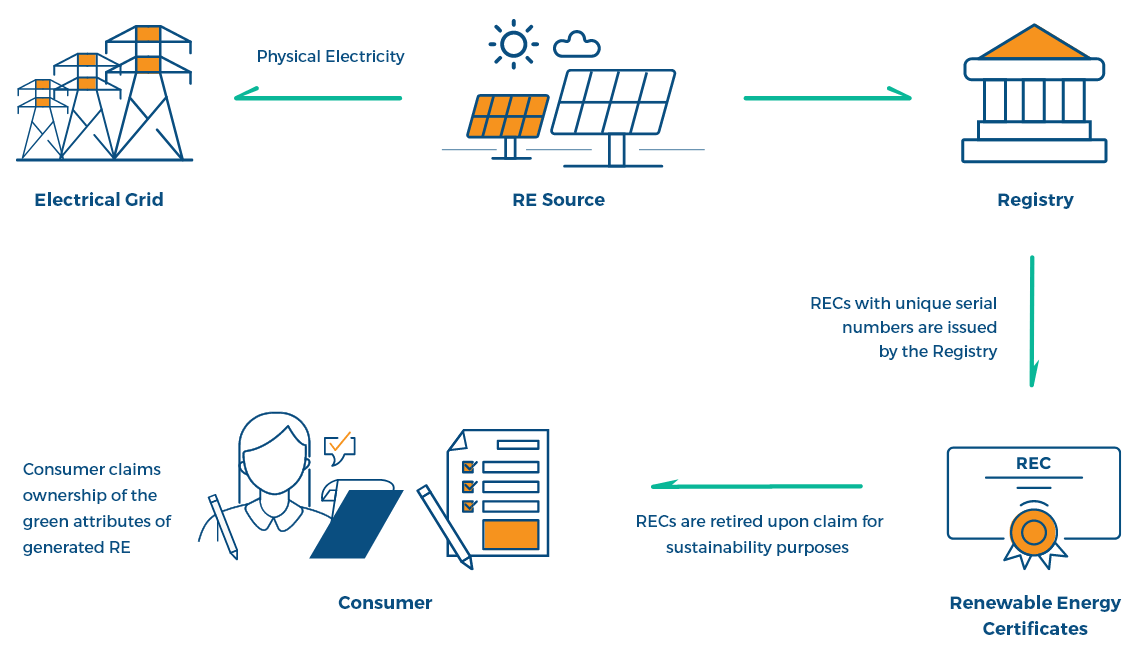
Although REC and electricity are generated from the same source at the same time, they are different products, with different markets. For instance, an industrial customer buys 1,000 MWh a year from Utility A where the energy source is from coal and natural gas, as opposed to buying 1,000 RECs. Though the customer is not producing clean energy or not being physically powered by RE, they can claim to be running on 100% RE.
RECs are tradable and only the end-user who retire the REC can claim the environmental benefits. By that, not only it guarantees the source of the energy, but it also ensures that the “renewable benefit” will not be double claimed.
Why Should Renewable Energy Generators Register REC?
- Promoting your company’s commitment to RE while building stronger relationship with community and encouraging dialogue about RE.
- Creating an additional revenue stream to your solar investment by selling for profit to businesses looking to offset their carbon emissions or speculators betting on the value of energy credits.
- Supporting the nation in bringing together key stakeholders to scale up RE adoption rate and to be the leader in driving sustainable economic growth.
How Do REC Works?
How Can Solarvest Help?
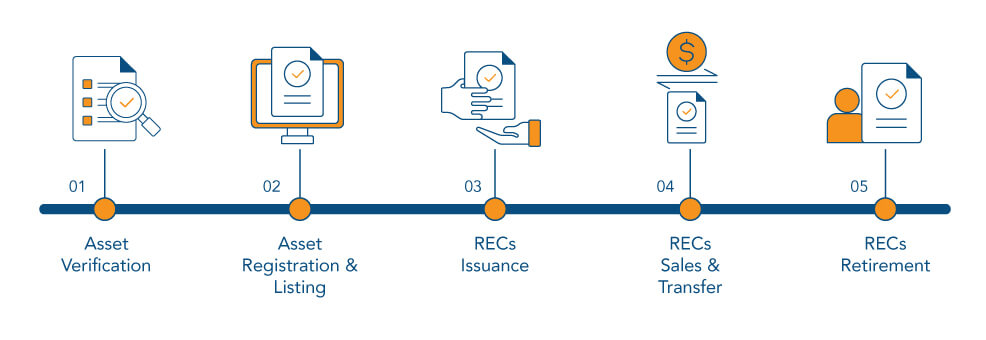
As a one-stop clean energy specialist, we aim is to see all our client go 100% renewable today and the transition to an all-renewable energy system is not a simple task. We are partnering with T-RECs ai through their AI powered platform – REHash, to help you register your renewable assets, in addition to sell and retire your RECs.
Solarvest RECs Solution offers:
Magnify your renewable energy investment value by monetising your REC. To inquire more about RECs solution for your business, speak to our consultant at https://solarvest.my/contact-us/ or dial into 1700-81-4611.